
The Haagstromm Case in the Prisoner’s Vision
The RoomThis flow traces the imagined assault on Mrs. Haagstromm from a story of police violence into the prisoner’s projected campaign to expose, punish, and permanently discredit the officers.
increasing Bearing strength in each event
 decreasing
Bearing strength in each eventdecreasingThe Assault Story Emerges
The Assault Story Emerges
A second victim enters the narrative
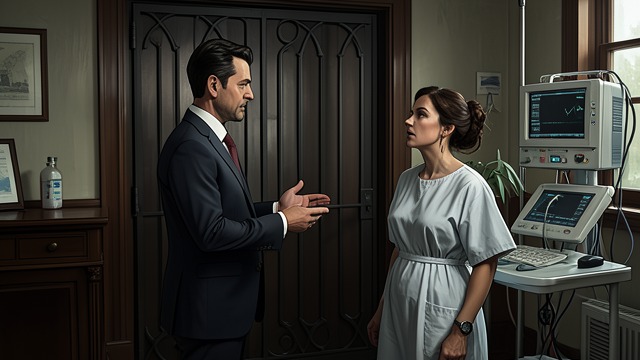
The prisoner imagines describing Mrs. Haagstromm as a young mother whose life was destroyed after two police officers stopped her car. He presents her case as a far graver example than his own detention, shifting attention from personal grievance to a victim whose suffering could move a public audience.
A narrative of severe harm
In the imagined account, the officers take her to a secluded place and subject her to repeated assault. The story emphasizes both physical injury and the prolonged psychological consequences, including her treatment at General Hospital and later confinement in the State Mental Hospital. The prisoner describes the aftermath as a human cost that official indifference has left unresolved.
Public testimony as accusation
He uses her story to argue that abuses tolerated as isolated misconduct can have lasting consequences for victims and families. Within the fantasy, her case gives his campaign moral gravity and a public purpose. The account is part of his imagined testimony, not an independently established investigation in the narrative present.
The Senate’s Imagined Response

The Senate’s Imagined Response
A story meets an audience
The prisoner imagines members of a Senate committee listening as he describes Mrs. Haagstromm’s injuries and the effect on her family. He presents the case as an example of a danger that could touch any household, trying to make the senators see an individual tragedy as a public responsibility.
Praise confers authority
In the imagined scene, the room reacts with attention and applause, and the committee chairman thanks the witnesses for bringing evidence forward. Their approval confirms the prisoner’s self-image as a courageous public figure. The Senate setting gives his account an authority he cannot secure from inside his actual cell.
The limits of imagined redress
The scene promises official recognition but does not establish that an external inquiry has occurred. Its emotional resolution depends on the prisoner’s imagined audience accepting his account and sharing his judgment. The fantasy thus supplies acknowledgment while leaving the real-world fate of the alleged victim and alleged offenders unresolved.
The Imagined Psychiatric Commitment
The Imagined Psychiatric Commitment
A legal outcome instead of punishment
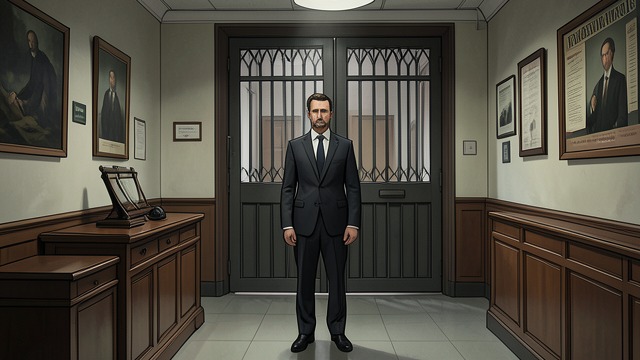
The prisoner imagines that the officers are judged emotionally unfit for police work and committed to a mental institution. He accepts this outcome publicly as just, saying that criminal punishment would not restore Mrs. Haagstromm’s health. In private, however, he imagines ensuring that their confinement lasts as long as he can manage.
Rehabilitation turned into retaliation
He pictures restrictions, distressing surroundings, and a future release that he intends to obstruct through continued scrutiny. His language of public safety gradually gives way to explicit plans for humiliation and prolonged suffering. The imagined commitment becomes less a clinical judgment than an instrument of revenge.
Families drawn into the punishment
The prisoner extends the imagined consequences to the officers’ families and children, envisioning social shame and relentless exposure. This extension reveals how far his retaliatory logic reaches beyond the alleged perpetrators. The fantasy transforms a proposed institutional response into a broad plan to make others experience the despair he associates with his own confinement.
The Secret Photograph Scheme

The Secret Photograph Scheme
A new means of leverage
The prisoner imagines that the officers’ wives visit him and that he secretly photographs them. He pictures the resulting images as evidence he can distribute to the officers’ families, friends, and community. The scheme extends his campaign from public argument into covert personal coercion.
Exposure as punishment
In his fantasy, the photographs provoke panic and pleas for mercy, while the people connected to the officers face disgrace. He imagines the resulting pressure as a way to keep the officers confined and to make their private lives part of his retaliation. The plan reveals the distance between his stated commitment to lawful public accountability and his willingness to use deception.
A closed circle of revenge
The imagined scheme cannot undo Mrs. Haagstromm’s suffering and offers no dependable path to justice. Instead, it reproduces the logic of domination that the prisoner condemns in the authorities. His vision of exposing abuse has become a private system of punishment, with himself as investigator, judge, and source of coercive power.
A Counterfeit Public Victory

A Counterfeit Public Victory
The story of confinement continues
The prisoner imagines reading that the officers have attacked hospital staff and tried to escape, after which they are restrained in a more secure part of the institution. Their breakdown appears to confirm the punishment he wants to impose. The report gives his imagined revenge a new episode beyond the courtroom.
Distance from the original victim
As the prisoner dwells on the officers’ distress and on the consequences for their families, Mrs. Haagstromm’s own experience recedes from the center of his attention. Her suffering initiated the public accusation, but his fantasies increasingly concentrate on what he can make the accused officers endure. Justice becomes measured by the intensity and duration of their humiliation.
No verified resolution
The novel presents this continuing case as part of the prisoner’s imagined world rather than as a confirmed sequence of public events. It ends without establishing a real verdict, institutional reform, or recovery for Mrs. Haagstromm. The apparent victory instead exposes how completely the pursuit of justice has merged with the prisoner’s appetite for control.
During the imagined Senate testimony, after the prisoner’s opening address
Immediately after the prisoner’s imagined account of the assault
After the imagined courtroom confrontation with the officers
Later in the prisoner’s imagined future, after the officers’ commitment
Near the end of the imagined case, after news of the officers’ escape attempt
